
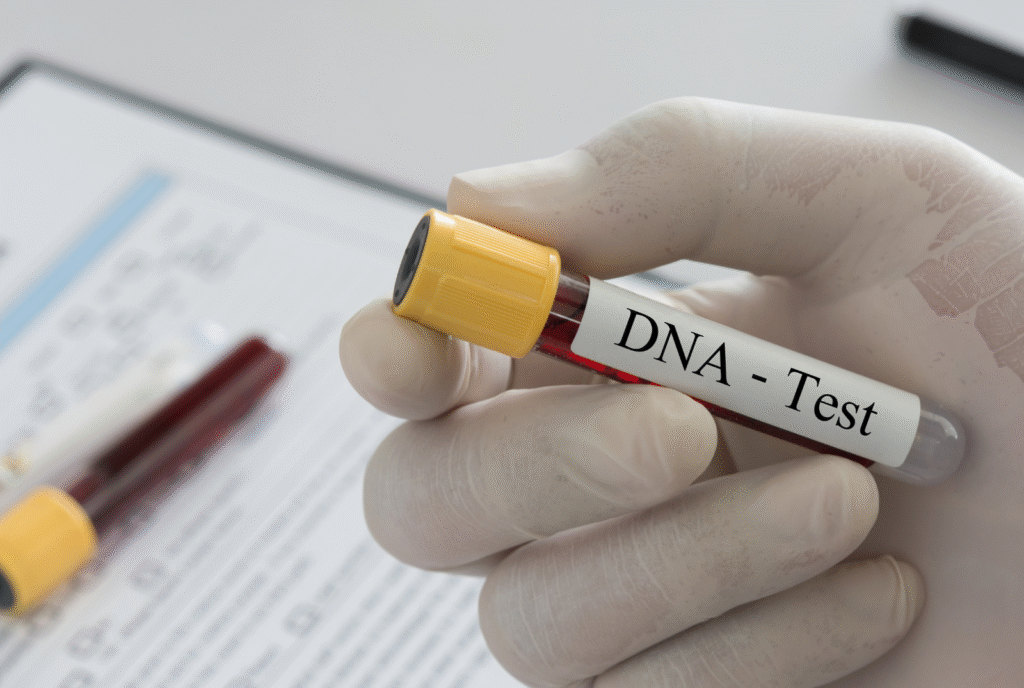
One question about paternity left without an answer can have a toll on families. It may be a father who wants to be sure, a mother who wants to have legal evidence of custody, DNA testing is the best scientific way to solve biological relations. In current times, state of the art genetic testing laboratories are able to ascertain biological parentage with greater accuracy of more than 99.99, which is acceptable to the courts, hospitals and legal authorities.
However, not all DNA tests are equal. DNA paternity testing, legal DNA testing and prenatal DNA testing all serve distinct purposes, have different procedures, and utilize distinct requirements of sample collection, chain-of-custody testing, and laboratory testing. Knowing the functioning of each test will assist individuals to make the appropriate choice besides making their results reliable, admissible and confidential.
Why DNA Testing Is the Only Reliable Way to Confirm Paternity
The definition of who is a father used to depend on assumptions or comparison of blood types in the past decades. This has been transformed by the modern DNA profiling technology. Each person acquires half of his or her genetic markers through his or her biological mother and the other half through his or her biological father. Through a combination of certain Short Tandem Repeats (STR) signature in the genetic code of an individual, it is possible to identify a tested male as possessing the essential markers to be the biological father by assessing them in the laboratory.
Average genetic markers are usually 20-24 samples, tested by professional accredited sources of DNA laboratories, and this is very high accuracy. Such an analysis gives the family confidence and gives evidence that the law systems can use.
Understanding At-Home Paternity DNA Testing
A common way that many individuals who are in need of a DNA test start is by using an at-home paternity test. This alternative is privacy assured, convenient and quick. This is normally done using a buccal swab sample; a painless cotton swab that is being rubbed against the inner area of the cheek to gather a cellular sample containing DNA.
At-home testing kits typically include:
- Sterile DNA collection swabs
- Sample envelopes
- Identification forms
- Instructions for sample collection
- Return packaging for laboratory submission
When the samples are brought to an accredited DNA testing laboratory, the technicians isolate genetic material and carry out polymerase chain reaction (PCR) amplification, which enables them to investigate certain genetic markers. Depending on the time taken by the laboratory, the results are normally available after 2-3 business days.
Although this choice may be convenient, it should be noted that home DNA tests are informative. Their admissibility under law cannot be made since the identity of the people offering samples cannot be officially confirmed..
Legal DNA Testing for Court, Custody, and Immigration Cases
In situations where DNA results are needed in legal matters, the test procedure is bound by stringent procedures called chain-of-custody procedures. A legal paternity test will identify all participants and can be used to confirm that the DNA sample has not been interfered with.
Legal testing is often required for situations such as:
- Child custody disputes
- Child support cases
- Inheritance claims
- Adoption verification
- Immigration sponsorship documentation
- Birth certificate amendments
In comparison to home kits, legal DNA test involves the participants visiting an authorized DNA collection location, hospital or a medical clinic. Practiced technician checks identification papers, takes cheek swabs, photographs respondents and notes the information collection procedure.
All the samples are closed and followed by official records and then submitted to an official AABB-approved DNA lab. These rigorous practices are used to make sure that the outcomes can be deemed legal and must be able to be taken to court.
Due to these protection measures, judges and other government bodies rely on the findings of legal DNA testing to ascertain rights or duties of parents.
How Prenatal DNA Testing Determines Paternity Before Birth
To pregnant women who are in a dilemma of determining paternity, prenatal DNA testing gives it all the answers prior to delivery. The modern non-invasive paternity testing of the fetus (NIPP), employs sophisticated genetic technology to examine fetal DNA in the maternal blood.
When a woman is pregnant a few bits of the fetus DNA circulate in the blood of the mother. These fragments of cell-free fetal DNA can be isolated in the laboratories and matched with the DNA profile of the alleged father. Through the analysis of thousands of genetic markers, paternity can be determined with very high precision..
A non-invasive prenatal DNA test involves two samples:
- A blood sample from the mother
- A cheek swab sample from the alleged father
Since all that is needed to conduct this test is a blood test on the mother, there is no risk of the test to the pregnancy as opposed to older invasive methods like amniocentesis or chorionic villus sampling (CVS).
Prenatal DNA testing can usually be conducted as early as 7 to 10 weeks of pregnancy where the parents are already able to get the answers well before the birth of the baby.
Choosing a Reliable DNA Testing Provider Near You
When it comes to searching the DNA testing services near you, it is common to find dozens of DNA labs and collection facilities. Not every provider, however, is equally professional. When choosing a testing service, a number of factors have to be taken into consideration.
To start with, the laboratory must be AABB-certified or meet the standards of internationally accepted genetic testing certification. Accreditation helps ensure that the facility is up to date about rigorous standards of handling and testing of samples, as well as control of quality.
Second, ensure that the provider provides legal chain-of-custody testing in case the results might be needed in court. A lot of cheap DNA testing providers do not present information in the form of results.
Third, examine the turnaround period of the lab, how the laboratory is going to test and the laboratory confidentiality. Trustworthy DNA testing firms have open information on their technology and procedures.
Lastly, customer support and testing advice should be provided by professional providers, who advise the client on which test is most suited to their case, be it paternity testing, legal tests, or prenatal analysis.
Conclusion
Questions on the biological connections may cause emotional, legal, and financial ambiguity. Luckily, there are scientifically validated answers which are given by modern technology of DNA tests. It is true that no matter the kind of test one requires, be it a paternity test, legal DNA test or prenatal paternity test, the current accredited laboratories are capable of providing the results with utmost accuracy.
When DNA testing is done by qualified personnel, the results are the answers that the whole family can rely on and reports that will be accepted in court.
When a person needs to get reliable DNA testing in your area, it is recommended to find a professional who is experienced in that field so that the results are precise, the sample is collected professionally, and the results are not disclosed to any third party. One of the reliable providers of all-purpose paternity, legal, and prenatal DNA testing is Fast DNA Tests, a company that is reputed to offer secure, accurate, and professionally conducted genetic testing services.